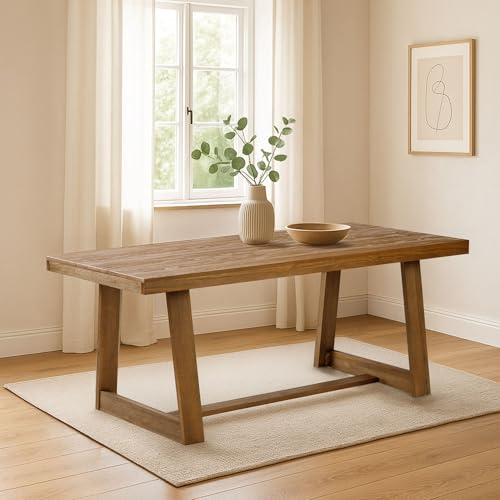
Surface and care specs at a glance
| Product | Top material | Size | Stated surface care | Capacity |
|---|---|---|---|---|
| LITTLE TREE Dining Table for 6 People | High-quality wood, 1.18" thick top | Not stated | Scratch-resistant; wipe with a damp towel | Not stated |
| Plank+Beam Classic 72 Inch Dining Table | 3 solid wood panels, solid wood legs, non-toxic finish | 72"L x 36"W x 30"H | Not stated | Not stated |
| 71-87 Inch Extendable Dining Room Table | Engineered MDF | 70.9"–86.6" extendable | Anti-penetration, food-safe finish; wipes clean | 300 lbs |
| Devoko 6 Person Acacia Wood Dining Table | 2.16" solid acacia, steel legs | 69"L x 33"W x 30"H | Anti-corrosion treated; wipe with wet rag; cover and oil if left outdoors | Not stated |
| Garvee 71" Farmhouse Dining Table | Engineered wood, 5.9" wide legs | 71"L x 35.43"W | Not stated | 400 lbs |
| Farmhouse Dining Table for 6 (BERRY NEST) | Wood, thickened legs, reinforced frame | 70"L x 31"W | Scratch- and water-resistant; wipe with damp cloth | 400 lbs |
Quick answer: For everyday care, wipe the table with a barely damp microfiber cloth, then dry it immediately with a second dry cloth — standing water is what kills wood finishes, not dirt. Skip all-purpose sprays, vinegar, and anything labeled "polish with silicone," and use trivets and placemats so heat and moisture never touch the surface directly. Once or twice a year, do a deeper clean and re-treat the finish (wax or oil, depending on what your table has).
Know what finish you're dealing with first
Almost every mistake in wood table care comes from treating the wrong finish. There are basically three:
Film finishes (polyurethane, lacquer, conversion varnish) sit on top of the wood like a clear plastic skin. Most mass-market tables have these. Water beads on them. You clean them; you don't feed them.
Finding the right how to care for wood dining table comes down to matching the features to how you will actually use it.
Penetrating oil finishes (tung, linseed, hardwax oil) soak into the wood. Water darkens the spot rather than beading. These need re-oiling periodically.
Laminate or veneer over engineered wood looks like wood but is a printed or thin real-wood layer over MDF/particleboard. Never let water sit at the edges or seams — that's where swelling starts and it's not repairable.
Quick test: put one drop of water on an inconspicuous spot. Beads up and wipes away clean after five minutes? Film finish. Soaks in and leaves a dark spot that fades as it dries? Oil finish.
The step-by-step routine
1. Dry-dust first, before anything wet. Use a dry microfiber cloth and wipe with the grain. The gotcha: crumbs and grit act like sandpaper the moment you introduce moisture and start scrubbing. Every "mystery scratch swirl" I've seen described comes from wet-wiping over dry crumbs.
2. Wipe with a barely damp cloth. Wring it until it feels almost dry. Plain water handles most food residue. If you need more, one drop of dish soap in a cup of warm water is plenty. The gotcha: never spray cleaner directly onto the table. It runs into seams, joints, and the underside of the edge banding, and that's where damage compounds invisibly.
3. Dry immediately with a second cloth. Not "let it air dry." Two minutes of standing water on an oil finish or a veneer seam does more harm than a month of dusty neglect.
4. Deal with spills the second they happen. Wine, citrus, ketchup, and anything alcoholic are the aggressive ones. Alcohol dissolves lacquer finishes on contact — a spilled cocktail left ten minutes can leave a permanently dull patch.
5. Protect against heat and moisture proactively. Trivets under anything hot, coasters under anything cold, placemats under anything a kid is holding. Hot dishes are the single most common cause of white cloudy rings — the heat drives moisture into the finish.
6. Re-treat once or twice a year. Oil finishes: clean, dry fully, apply thin coats of the manufacturer's recommended oil, wipe off all excess after 15 minutes. Film finishes: a paste wax buff once a year is optional and adds sacrificial protection. Manufacturers sometimes recommend oiling even on treated surfaces in harsh conditions — Devoko, for instance, notes that its acacia table should be covered and oiled if it's left outdoors long term.
7. Manage the room, not just the table. Keep it out of direct sun (UV fades and yellows finishes unevenly) and away from a heating vent. Wood moves with humidity; a home swinging between 20% and 70% humidity will open joints and can crack solid tops over a few seasons.
What goes wrong, and what actually fixes it
White cloudy ring — symptom: hazy pale circle where a hot mug or wet glass sat. Cause: moisture trapped in the finish, not in the wood. Fix: lay a clean cotton cloth over it and press with a warm (not hot) iron on the lowest setting, a few seconds at a time, checking between passes. A hair dryer at moderate heat also works. This resolves most of them.
Dark black ring — symptom: dark stain that doesn't budge. Cause: water got through the finish into the wood and reacted with tannins. Fix: this one needs refinishing of that section, or oxalic acid wood bleach. There's no wipe-away trick.
Dull, gummy, streaky surface — symptom: table looks cloudy no matter how much you clean it. Cause: buildup from silicone-based spray polishes. Fix: wipe with a cloth dampened in a 1:1 mineral spirits/water solution or a dedicated wax remover, then stop using spray polish. Also: silicone contamination makes future refinishing genuinely difficult, so this is worth breaking the habit over.
Swollen, bubbling edges — symptom: the edge feels puffy or the veneer lifts. Cause: water wicking into an engineered-wood core at a seam. Fix: essentially none. This is why edge-drying matters most on MDF-core tables.
Wobble that appears after a year — symptom: table rocks, joints creak. Cause: hardware backing out with seasonal wood movement. Fix: flip it or crawl underneath and snug every bolt with the supplied hex key. Do this every six months as maintenance, not as repair.
Faded stripe across the top — symptom: one band is lighter. Cause: sun through a window, plus a runner or placemat blocking part of it. Fix: prevention only — rotate the table 180° twice a year and move mats around so exposure evens out.
When the fix is a new one
Sometimes the finish is past saving, or the core has swelled, and maintenance stops being the answer. These are options in that situation — check current listings and read the review sections yourself before deciding.
Plank+Beam Classic 72 Inch Dining Table, Rectangular, Pecan Wirebrush — solid wood you can actually refinish
Devoko 6 Person Acacia Wood Dining Table for Kitchen, Natural — thick acacia with an oil-friendly maintenance path
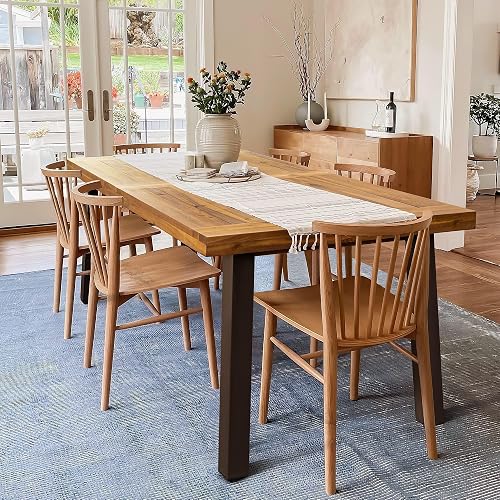
LITTLE TREE Dining Table for 6 People, Wooden Dining Table — scratch-resistant top for a hard-use kitchen
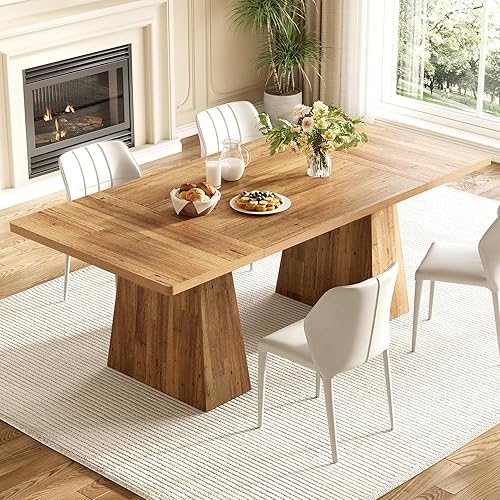
Farmhouse Dining Table for 6, Rectangle Dining Table, Kitchen Table Oak — water-resistant surface and rounded corners
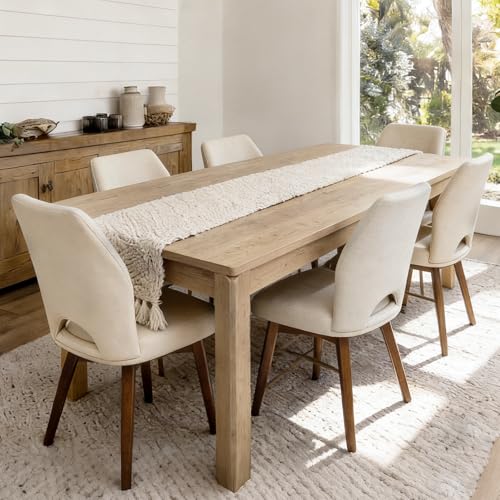
71-87 Inch Extendable Dining Room Table, Rustic Wooden Kitchen Table 6-10 — a sealed top with extension hardware to keep clean
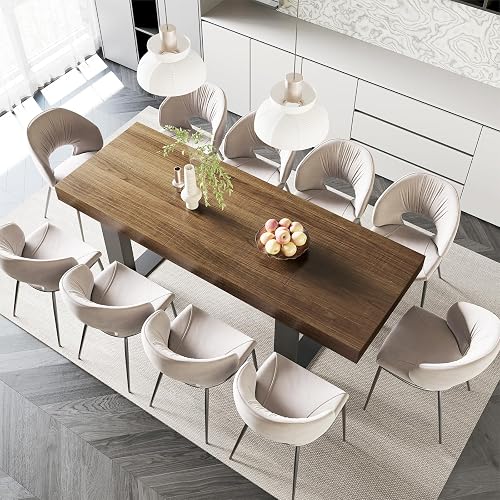
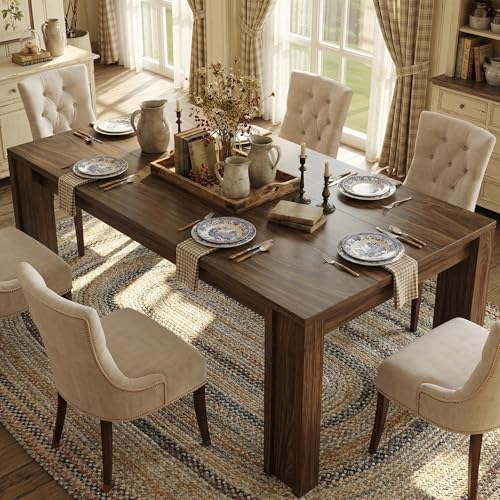
Garvee 71" Farmhouse Dining Table for 4-6 — wide-leg engineered wood built around stability
FAQ
Can I use vinegar to clean my wood dining table? Don't make a habit of it. Vinegar is acidic and will dull lacquer and shellac finishes over time, and it can strip wax. Water with a drop of dish soap does the same job with none of the risk.
How do I care for a wood pedestal table specifically? Same surface routine, but the pedestal adds one job: the single central column carries all the load, so check the bolts where the column meets the base and the tabletop every six months. Pedestals also show wobble sooner than four-leg tables because there's no second point of resistance — early creaking is your cue to tighten, not to live with it.
Should I use furniture polish? Generally no on modern film finishes. Silicone-based sprays build up into a streaky haze and complicate any future refinishing. If you want extra protection, a thin coat of paste wax buffed out once a year is the better tool.
How often should I oil an oil-finished table? Twice a year is a reasonable default for a table in regular use, or whenever water stops beading and starts darkening the wood. Thin coats, wiped fully dry after 15 minutes — excess oil left on the surface turns sticky.
Related guides
- Current Rates for Best dining room furniture and tables - dining tables, dining chairs, bar stools, sideboards, kitchen islands, counter-height dining sets, china cabinets, bar carts, kitchen dining sets
- Top 10 Tips for Best dining room furniture and tables - dining tables, dining chairs, bar stools, sideboards, kitchen islands, counter-height dining sets, china cabinets, bar carts, kitchen dining sets
- How to Buy Dining Chairs Without Regretting It
Key Takeaways
- Choosing the right how to care for wood dining table means matching the key features to your specific needs and budget
- Read real customer reviews and check the return policy before you commit
- Compare value across models — the priciest option is not always the best fit