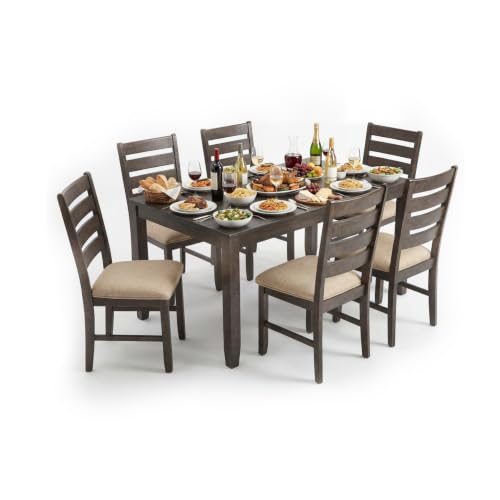
Specification table
| Product | Price | Table size | Chair size | Pieces | Materials |
|---|---|---|---|---|---|
| Signature Design by Ashley Rokane 7-Piece | Check price on Amazon | 36" W x 60" D x 30" H | 17.75" W x 21.5" D x 38.75" H | Table + 6 chairs | Veneers, wood, engineered wood; polyester upholstery, wood frame |
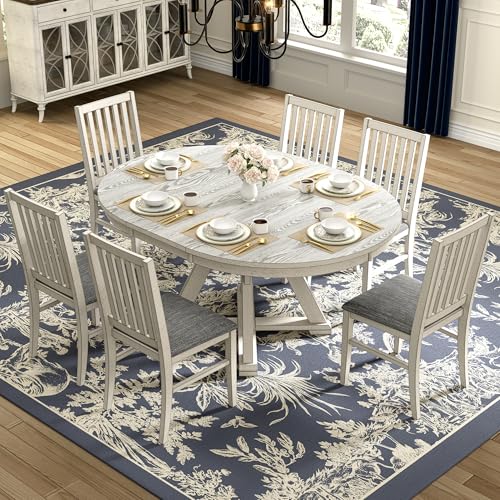
| Peatuk Solid Wood Dining Table | Check price on Amazon | Not stated | Not stated | Table + 2 chairs (sold separately) | Solid wood, mortise & tenon joints |
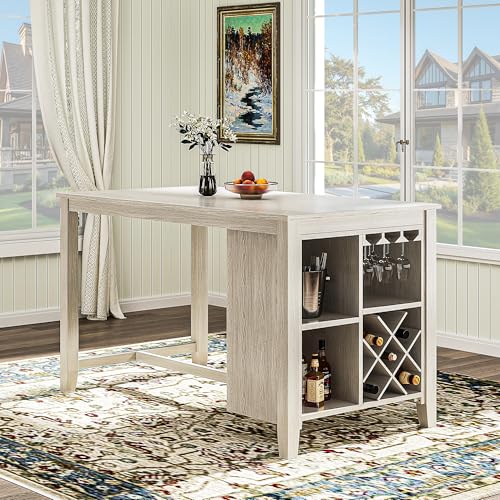
| Peatuk Solid Wood Dining Table Set with Storage Shelves | Check price on Amazon | Not stated | Not stated | Table + 2 chairs (sold separately) | Solid wood, mortise & tenon joints |
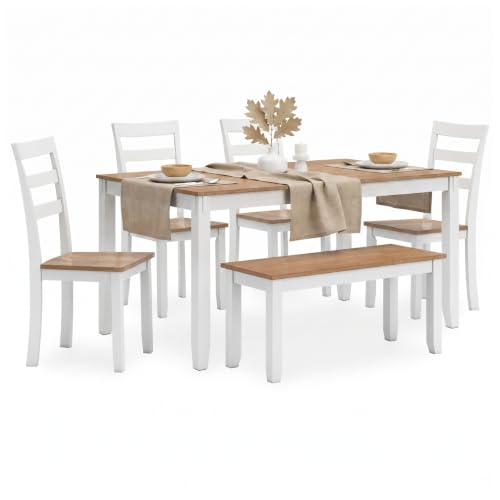
| Signature Design by Ashley 6-Piece with Bench | Check price on Amazon | Not stated | Not stated | Table + 4 chairs + bench | Mango wood veneer over MDF, rubberwood solids |
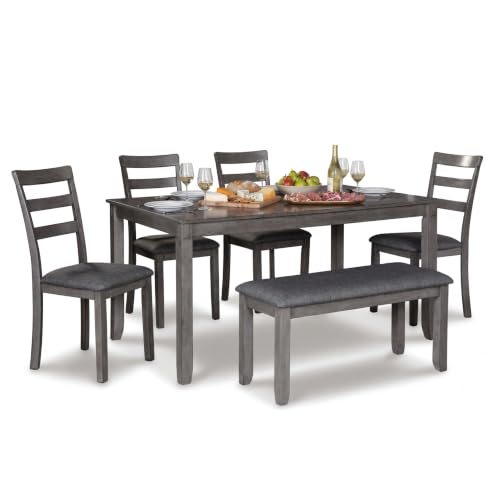
| Signature Design by Ashley Bridson 6 Piece | Check price on Amazon | 36" W x 60.13" D x 30" H | 16.88" W x 22" D x 37.75" H; 38" bench | Table + 4 chairs + bench | Wood, veneer, engineered wood; gray polyester |
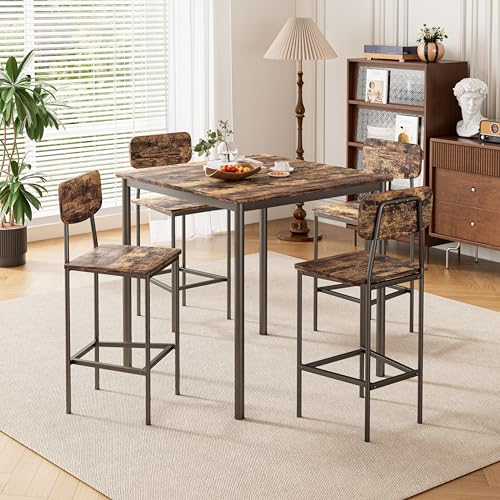
| TJYGO Kitchen Table and Chairs of 4 | Check price on Amazon | 35.5" x 35.5" (counter height) | Not stated | Table + 4 bar stools | Medium-density fiberboard, metal frame |
Quick answer: Match chairs to a table by locking in three measurements first — seat height 10–12 inches below the tabletop, roughly 24 inches of table edge per person, and enough leg clearance for the chair to tuck under. Once the fit works, style is the easy part: pick one shared element (wood tone, finish, or leg shape) and let everything else contrast deliberately. If you're starting from scratch, a table sold with matching chairs removes the guesswork entirely.
The three measurements that decide everything
Before you think about color, run these numbers.
Seat height. Standard dining tables sit at 30 inches high. Chairs should put your seat 10–12 inches below that, so 18–19 inches is the target. The Signature Design by Ashley Bridson set follows this exactly — a 30-inch table with 37.75-inch-tall chairs. Counter-height is a different world: the TJYGO set pairs a counter-height table with bar stools, and swapping a standard dining chair into that setup leaves you eating at chin level.
Finding the right how to mix and match dining chairs with table comes down to matching the features to how you will actually use it.
Width per seat. Budget about 24 inches of table edge per person. A 60-inch rectangular table like the Rokane comfortably fits two per long side and one at each end, which is why it ships with six chairs.
Tuck clearance. Chair width matters when everything is pushed in. Rokane chairs are 17.75 inches wide; Bridson chairs are 16.88 inches. On a 60-inch side, three 17.75-inch chairs fit with room to spare. Also check apron depth — a thick table apron can block a chair with a tall back rail from sliding under.
The style rules that actually hold up
Once the fit is right, use one of three approaches:
Contrast the material, share the tone. Wood table, upholstered chairs — but keep the color temperature aligned. The Rokane set demonstrates the principle: cream polyester upholstery against a weathered brown finish. Warm neutral against warm wood reads intentional. Cool gray fabric on a warm honey table reads like a mistake.
Share the material, contrast the form. Wood chairs with a wood table works if the shapes differ. The 6-Piece Dining Table Set with Bench uses a deliberate two-tone approach — crisp white finish contrasting light natural mango wood — proving that the same material family can carry visible contrast.
Break the set on purpose. Four matching side chairs plus two different end chairs is the most reliable "mixed" look because the asymmetry is obvious enough to read as a choice. A bench on one side does the same job; both the Bridson set and the 6-Piece with Bench are built this way.
The rule that ties all three together: repeat one element at least twice. If you introduce black metal chair legs, put black somewhere else — a light fixture, a rug border. One isolated element looks orphaned.
Buy separates, or buy the set?
Peatuk's tables are explicitly built for mixing. The Peatuk Solid Wood Dining Table describes a "custom combo" where the table and two chairs are sold separately, so you scale to a set for 2, 4, or 6. That's the freedom you want if you already own chairs you love or plan to accumulate seating over time.
The trade-off is real: buying separates means you own the compatibility problem. Nobody checks your seat height for you. Nobody guarantees the chair tucks under the apron. If you want mixing without the risk, buy a coordinated set and swap only the two end chairs later — you keep four guaranteed-fitting chairs as your baseline.
Who this approach is for
Mixing chairs and table works well if you have a table you like and don't want to replace it, if you're furnishing gradually, if you want a room that looks collected rather than showroom-ordered, or if you need flexible seating — a bench for kids, real chairs for adults. It also suits anyone with an odd-shaped room where a standard set doesn't fit the footprint.
Who should skip it
Skip deliberate mixing if you're furnishing a room from empty in one weekend — the coordination overhead isn't worth it, and a complete set like the Rokane 7-Piece gets you to done immediately. Skip it if your table is counter height, because the pool of stools that pair correctly is much smaller and mismatched heights are unforgivable. Skip it if you're renting short-term and hunting for individual chairs will cost more time than the look returns. And skip it if you find visual inconsistency stressful rather than charming — that's a legitimate preference, not a failing.
Honest trade-offs
Mixed chairs cost more per seat than a set. Buying six chairs individually almost always exceeds the per-chair cost inside a bundle.
Replacement gets harder. Break one chair from a matched set and you order another. Break one from a mixed arrangement and you're hunting a specific discontinued piece.
Upholstery is a comfort win and a maintenance loss. The Rokane and Bridson sets both use polyester cushioned seats. The 6-Piece with Bench goes the other way with contoured mango wood veneer seats that wipe clean with a dry or damp cloth — less forgiving on the body, far more forgiving with a toddler.
Solid wood costs more upfront than engineered wood. Peatuk's tables use solid wood with mortise and tenon joints; several Ashley sets use veneer over engineered wood. Both are legitimate. One survives refinishing.
What to check on the listing before you buy
- Current price. Every price here is a snapshot and furniture pricing moves constantly. Verify on the listing.
- Which variant you're selecting. The Peatuk listings explicitly sell the table and chairs separately — confirm exactly what quantity and configuration is in your cart before checkout, not after.
- Seat height, stated as a number. Not "standard." If a listing won't state it, ask.
- Warranty and return window. Bulky furniture returns can carry restocking fees or require original packaging. Read the terms.
- Assembly requirements. Rokane requires assembly with a screwdriver you supply. Check what tools are actually included.
- Reviews mentioning wobble or leg clearance. Go read them yourself — those two complaints are the most useful signal for whether a chair-and-table pairing will annoy you daily.
Consider instead if…
Signature Design by Ashley Rokane 7-Piece Dining Room Table Set with 6 Upholstered Chairs - Brown Wood 20" Rectangular Table & Chair Set for Kitchen Dining Room — consider instead if…
…you want the coordination done for you at six seats. The Signature Design by Ashley Rokane 7-Piece Dining Room Table Set pairs cream polyester upholstery with a weathered finish, and the 36" x 60" x 30" table with 17.75"-wide chairs is a proportion that works without you measuring anything.
Peatuk Solid Wood Dining Table, Part of Dining Table Set, Mix and Match Table & Chair Sold Separately for Dining Room, Kitchen, Grey — consider instead if…
…you specifically want to build the set yourself. The Peatuk Solid Wood Dining Table is sold as a custom combo so you can scale to 2, 4, or 6 seats, and the light gray solid wood with visible grain is neutral enough to accept most chair styles.
Peatuk Solid Wood Dining Table Set - Mix and Match Table, Chair, with Storage Shelves/Wine Rack/Glass Holder, Sold Separately for Dining Room, Kitchen, Grey — consider instead if…
…you need the table to store things too. The Peatuk Solid Wood Dining Table Set with Storage Shelves adds shelving, a wine rack, and a glass holder to the same mix-and-match solid wood platform, which matters in a small space where the table is also the sideboard.
Signature Design by Ashley 6-Piece Dining Table Set with Bench and Chairs — consider instead if…
…you want built-in contrast without sourcing it. The Signature Design by Ashley 6-Piece Dining Table Set with Bench and Chairs uses a two-tone white-and-mango-wood scheme, adds a bench for flexible seating, and includes adjustable levelers on the four chairs for stability on uneven floors.
Signature Design by Ashley Bridson 6 Piece Dining Set, Includes Rectangular Dining Table, 4 Ladderback Chairs & Bench, Wood, 36" W x 60.13" D x 30" H, Gray — consider instead if…
…you want a cool-toned starting point. The Signature Design by Ashley Bridson 6 Piece Dining Set runs medium charcoal gray with textured gray polyester on ladderback chairs, and every dimension is published — 36" W x 60.13" D x 30" H table, 16.88" W x 22" D x 37.75" H chairs, 38" bench.
TJYGO Kitchen Table and Chairs of 4, Dining Table Set for 4 with Space-Saving Design, Industrial Dining Room Table Set for Family Dinner, Party, Rustic Brown — consider instead if…
…you're working with counter height and tight square footage. The TJYGO Kitchen Table and Chairs of 4 is a 35.5" x 35.5" counter-height table with four footrest stools that store completely underneath when not in use.
FAQ
Do dining chairs have to match the table? No. They have to fit the table. Seat height 10–12 inches below the top, adequate width per person, and clearance to tuck under — get those right and mismatched finishes read as intentional rather than accidental.
How do I match chairs to a table when the wood tones are different? Match the undertone, not the shade. Warm wood pairs with warm wood at any darkness. A cool gray-brown next to a warm honey oak will fight no matter how close the values are. When in doubt, use a neutral chair — black, white, or upholstered — as a buffer between two woods that don't agree.
Can I mix chair styles at the same table? Yes, if the mix is unmistakably deliberate. Four of one style plus two of another, or side chairs plus a bench, both read as designed. Six chairs that are all slightly different read as leftovers.
What if my chairs are the right height but won't slide under? Check the chair's back height and the table's apron depth. Ladderback and tall-back chairs like the ones in the Bridson set need the seat, not the backrest, to clear the apron — measure from floor to the underside of the apron and compare against your chair's seat height plus any armrest.
Related guides
- How to Succeed with Best dining room furniture and tables - dining tables, dining chairs, bar stools, sideboards, kitchen islands, counter-height dining sets, china cabinets, bar carts, kitchen dining sets
- Crosley vs VASAGLE Kitchen Islands: What to Compare
- Best dining room furniture and tables - dining tables, dining chairs, bar stools, sideboards, kitchen islands, counter-height dining sets, china cabinets, bar carts, kitchen dining sets Requirements Explained
Key Takeaways
- Choosing the right how to mix and match dining chairs with table means matching the key features to your specific needs and budget
- Read real customer reviews and check the return policy before you commit
- Compare value across models — the priciest option is not always the best fit